

Bookbinder & Kaplin
Better Times Down the Road The Blue Goose Recordings Ltd. Ed. LP SPR 124
Git Fiddle Shuffle SPR 125 Ragtime Millionaire SPR 126
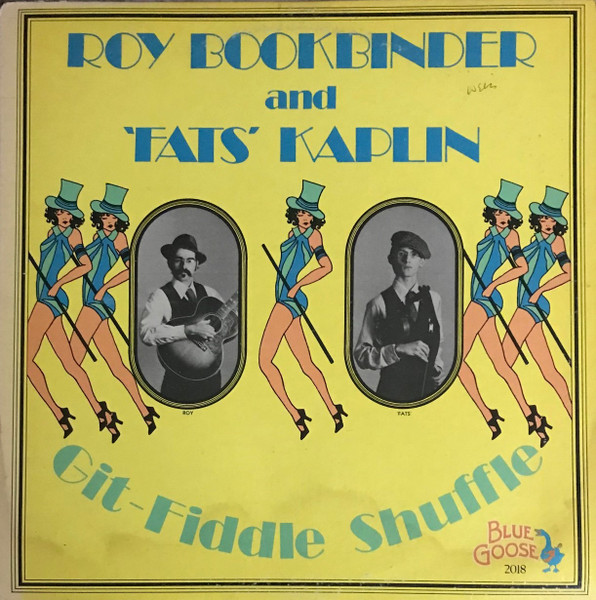
Spring Fed Records presents the legendary Blue Goose recordings of Roy Book Binder and Fats Kaplin, Git Fiddle Shuffle and Ragtime Millionaire, available for the first time in nearly 50 years.
Git-Fiddle Shuffle, was recorded in 1975 and released on Nick Perls' Blue Goose Records and features legendary folk blues troubadour and teacher Roy Book Binder and multi-instrumentalist Fats Kaplin, making his first recordings at age 18. Kaplin would go on to become a GRAMMY winning studio musician and bell weather of Nashville's Americana scene as a member of Jack White, John Prine, and Mitski's recording and touring bands in addition to co-founding Paul Burch's WPA Ballclub.
Git Fiddle Shuffle, recorded live to tape in 1975, is a reflection of their early repertoire featuring unique arrangements of rare 78s by the duo's favorite artists like Tom Dorsey, Bessie Smith, and Roy's mentors, Rev. Gary Davis and Pink Anderson.
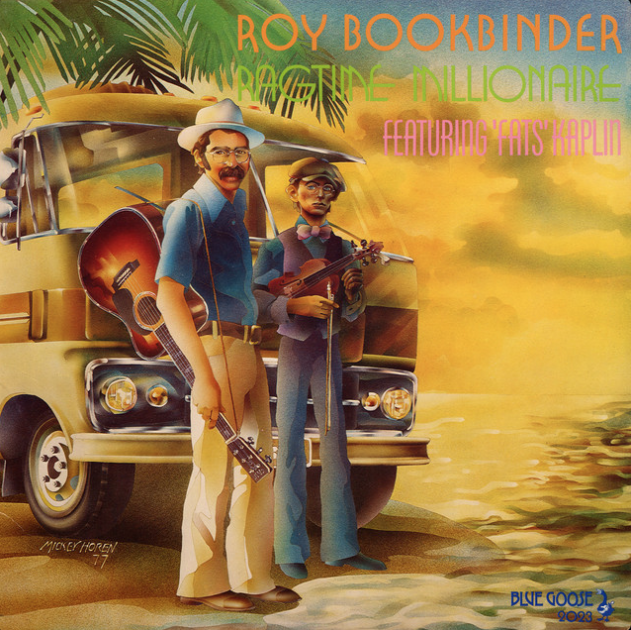
In 1977, Roy & Fats released Ragtime Millionaire which showcased Roy's songwriting as well as new arrangements of classics by Big Bill Broonzy and Blind Willie McTell. Recorded in Nick Perls' apartment in Greenwich Village, the duo was accompanied for the first time by piano and electric bass. In 2025, Roy & Fats collaborated with Spring Fed Records to present the limited edition LP Better Times Down the Road a compilation of the duo's favorite performances from their two albums for Blue Goose. Be sure to read our exclusive interviews with Roy and Fats below. Buy the LP here!
Blue Goose Records and Greenwich Village
Roy and Fats, both New York natives, began their musical friendship as a guitar, fiddle, and banjo duo in 1974, playing clubs and festivals throughout the greater New York City area and along the east coast, Midwest, and Canada working from their homebase in Greenwich Village.
From the late 1940s through the early 1970s, Greenwich Village fostered a dizzying variety of performing artists, painters, comedians, musicians, and raconteurs whose work made an ineffable impact on American popular culture through fiction, poetry, recordings, television, and film.
Local clubs like the Gaslight Cafe, the Kettle of Fish, the Bottom Line, the Village Gate, and Café au Go Go hosted performances by Joan Baez, Jack Kerouac, Allen Ginsburg, Carolyn Hester, John Sebastian (founder of the Lovin' Spoonful), John Coltrane, Bob Dylan, Pete Seeger, Lenny Bruce, Nichols & May, Judy Collins, Tom Paxton, Simon & Garfunkel, Rev. Gary Davis, Son House, John Lee Hooker, Jim Kweskin Jug Band, Dave Van Ronk, Peter Paul & Mary, Phil Ochs, Joni Mitchell, the Fugs, Jimi Hendrix, George Carlin, Woody Allen, among many more.
Blue Goose Records was one of two labels founded by Greenwich Village-based record collector Nick Perls, a native of Brooklyn and one of the revered characters of the Village scene. In 1967, Perls set up Belzona Records--soon to be renamed Yazoo--releasing Lp compilations transferred from his priceless collection of rare 78s by artists like Blind Lemon Jefferson, Charley Patton, and Mississippi John Hurt. Perls' collection would serve as a springboard of inspiration for Roy & Fats' repertoire.
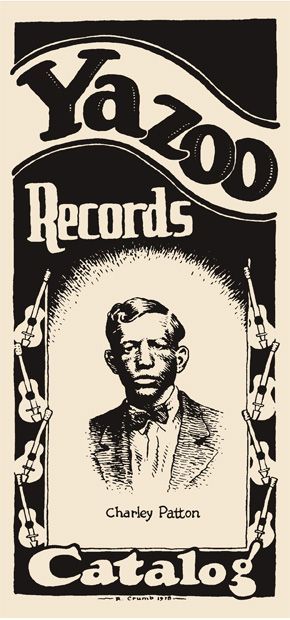
Most Yazoo LPs featured liner notes by Perls' longtime collaborator Steve Colt. Yazoo releases became a vital source of inspiration for a new generation of fans and music writers like Peter Guralnick, Greil Marcus, Robert Gordon, Robert Palmer, and Chet Flippo as they set out to discover and chronicle the roots of rock & roll in features for Rolling Stone, Cream, and the Village Voice. Along with Roy and Fats, Perls' Blue Goose Records also championed contemporary and classic artists such as Larry Johnson, artist R. Crumb and his Cheap Suit Serenaders, and Sam Chatmon of the Mississippi Sheiks.
The Village Voice magazine, co-founded with writer Norman Mailer in 1955, became the foremost authority on the city's cultural happenings and evolving attitudes towards the performing arts, politics, and civil rights. The Village Voice also launched the careers of a new generation of respected journalists, essayists, and critics including Nat Hentoff, Robert Christgau, Gary Giddens, and cartoonist Lynda Barry.
Spring Fed Records Interview: FATS KAPLIN
Fats Kaplin is a native of New York City where he grew up "falling asleep to the sound of Johnny Pineapple's Hawaiian Revue seeping through the steam pipes from the apartment below and Cantor Ackerman practicing next door." His family and family friends were artists, illustrators, and cartoonists. From an early age, Fats was drawn to jazz and string band 78s cut in the late ‘20s and ‘30s, an era that many serious musicians consider the most vibrant, dynamic, and difficult period in modern American popular music. Fats' dedication to numerous western and eastern instruments includes two of the most difficult, steel guitar and fiddle. Since moving to Nashville in the 1990s, his limitless vocabulary for melody, composition, and improvisation have made him a bell weather for the evolving Americana scene. Fats has contributed to GRAMMY winning records and performances by Jack White and Third Man Records, Mitski, John Prine, Elvis Costello, Beck, and as a co-founder of Paul Burch’s WPA Ballclub. In addition, Fats is a life-long magician and brings his act to the stage with his stellar band, the Fats Kaplin Gang and with his wife, singer Kristi Rose. Fats was voted Best Side Player in the Nashville Scene's Year-End Best of Issue in 2024.
Spring Fed Records: How did you meet Roy?
Fats Kaplin: Well, let's see, I was 17 and I had friends who lived in New Jersey in the South Orange area, generally speaking, who I had met maybe at….oh, I can't remember…summer camp, I think, you know, years before, something like that. So, I'd take the bus from Port Authority and head over there periodically. At that point, at 16, 17, I was getting much more serious about music, like I kind of locked down about it. And there was a small folk festival in that area, and I went to it. One of the very first ones I ever went to. And Roy was playing. I remember he was the only person I really stopped and listened to. And afterward at somebody's large house, they had a party, a gathering. I was there and Roy was in a living room or something, playing for some people. He looked up and said: “Hey, Fats, do you want to play a tune?”
The reason he said that was because I had a fiddle case on which I had an American eagle with a shield that was taken off of, I think, a Civil War poster or something like that. I put it on the case, and hand painted Fats Kaplin on it. So, he knew I was Fats Kaplan. I said, sure and we played. Roy was living in Greenwich Village and I was in the city, too, at that point. We got together and he said: “Hey, maybe we'll get together.” We got together, played some, played again, and then we started working together as a duo. And I went on the road with him professionally at 17.
SFR: What kinds of places did you play, and how far from New York did you go?
Fats Kaplin:We got kind of far. Rockford, Illinois, Canada, a lot on the East Coast, Boston, Chicago, folk clubs that were there like the Town Crier. Cafe Lena in Saratoga Springs, which we played many, many times. At that point, in the early 1970s, a lot of colleges had coffeehouses that had, like, folk music, or had a folk music series.
SFR: How long had you been playing fiddle at that point?
Fats Kaplin: Probably a couple of years, four years, something like that. I started out playing banjo. Soon afterward I was playing some fiddle, ukulele, mandolin. But fiddle I'd been playing pretty seriously for a number of years.
SFR: For your first album together, Git Fiddle Shuffle, how did work out your arrangements? Did Roy just sing and you filled in?
 Fats Kaplin: Yeah, he did his East Coast finger style, very heavily influenced by Reverend Gary Davis, whom he traveled with, and Pink Anderson, and other players like that. Blind William McTell. And also, the Mississippi Sheiks. Roy was the one who turned me on to a lot of that. I became very influenced by early jug band style, like the Memphis Jug Band from St. Louis, the Memphis Jug Band, Louisville Bands, and some of those early African American Jug Bands that had a fiddle as a lead instrument, which was kind of old-fashioned even at that point. But that stuff started influencing me and early jazz, as well as string band music in general, you know early string band music from Virginia down to Mississippi and Alabama, and stuff like that.
SFR: And where did you find those songs: where they reissued on LP or were you listening to 78s?
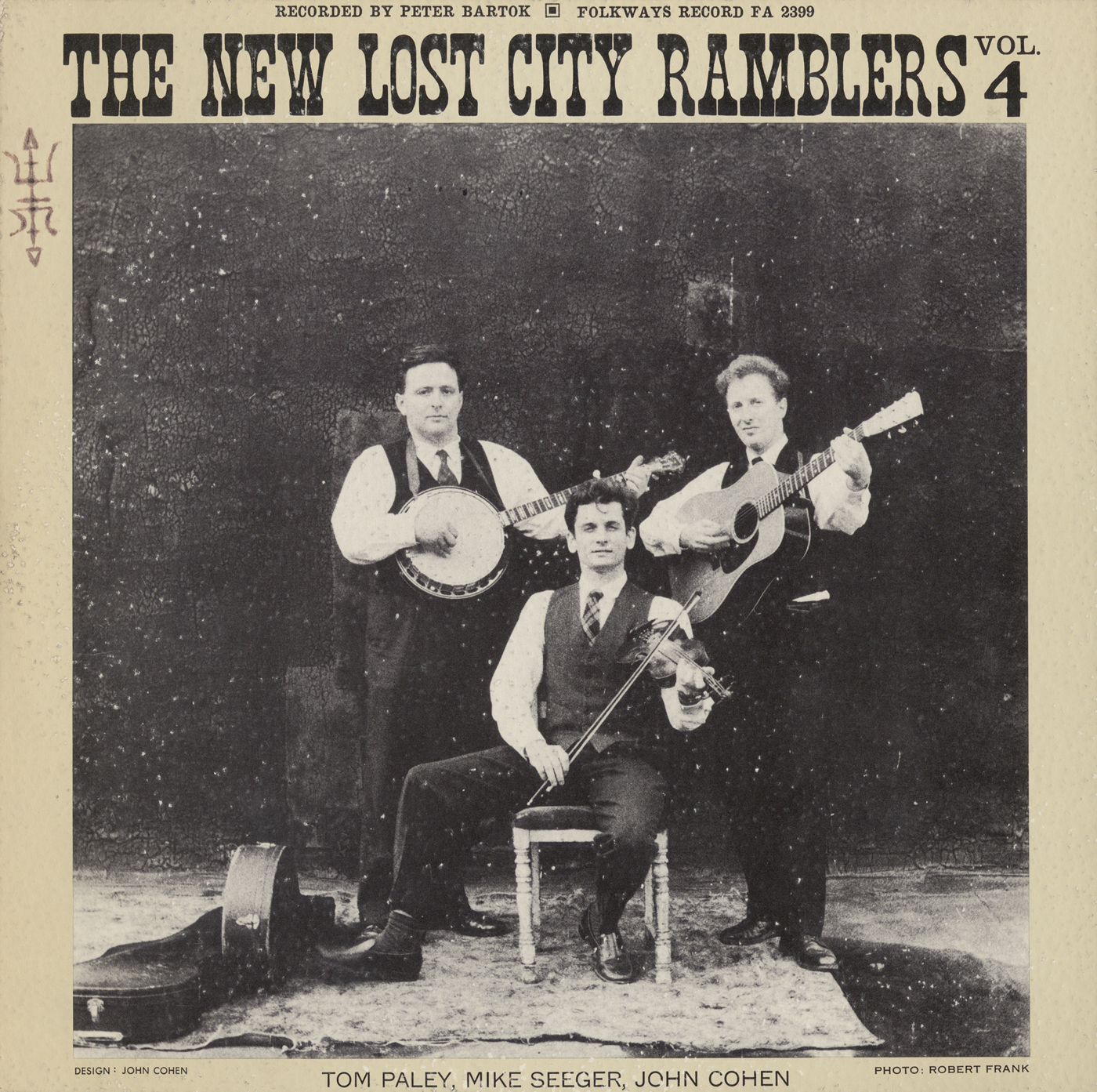
Fats Kaplin: No, no, I didn't have the wherefore at that point. I grew up on the Upper West Side, and when I started getting into banjo and fiddle music, I realized that the Lincoln Center Library, which I could take a quick subway ride or even walk down to, had all of this stuff. There were reissues on (the label) County of 78s, and then albums by people like Jim Kweskin and his Jug Band, who I really loved, and particularly the New York City Ramblers. I realized the New Lost City Ramblers were doing essentially identical stuff from a from a 78. I just would take those albums out over and over again. Bring them back, take them out, bring them back, take them out.
SFR: At this point, you both were making your living playing together?
Fats Kaplin: Yeah. And I going out on the folk scene and I was so much younger than almost everybody else. I was playing in clubs when I was underage. I should not have been playing in clubs and drinking whiskey and hanging out with people like Dave Van Ronk and Roy and stuff, but I was at 17 (laughs).
SFR: How much would those gigs make for you each, do you recall?
Fats Kaplin: Oh, I can't remember. Back then it seemed like great, you know--a couple hundred bucks or something. Our overhead was very low.
SFR: When you went to record Git Fiddle Shuffle with Roy was that the first time you had been in a studio?
Fats Kaplin: Yes. The first time, as I always say, like when I was playing on stage--places like Lena's and on serious stages, and then doing the album. At that point, I was playing tenor banjo and fiddle, and Roy was playing, of course, guitar, and occasionally he'd take along Reverend Gary Davis' six-string Gibson banjo, or something like that. It's funny. I’ve mentioned this before. As I look back on that, we just used two instrument mics and a vocal mic. And this was not by any aesthetic choice. I had no concept or even thought that you could put a pickup (in your instrument) or anything. It didn't even occur to me. I didn't know enough. I was just sitting there going, “Eh, I just put a mic on it, I don't know.” That’s what we did. We played the Philadelphia Folk Festival and places like that just that way.
SFR: Do you have any outstanding memories of making that first record?
Fats Kaplin: It was originally done for Philo Records, which was in Vermont at the Barn--I think it was called. Up in Brattleboro somewhere. And then when the album was going to come out, we made choices on having, the cover of the album, as I recall, this is a long, long time ago, was a design made to look like old sheet music. As I recall—and this was a long long time ago--was we wanted a design that looked like old sheet music. But they wanted to put on the cover that “Philo Records gives artist complete free reign and artistic choice…,” and all of this. And we were going…well…this was Roy’s choice, not mine—he said, “Well if we have Philo Records on the front, it gets in the way of the artwork.” And they got into a big beef about this. And finally Roy took it to Nick Perls who lived in the village, who Roy knew. And Nick said: “Yeah, let’s put it out.” The second album was recorded with Perls in his place in the West Village.
SFR: You’re not on that record as much.
Fats Kaplin: That’s right. In fact, that record says, “featuring Fats Kaplin,” because at that point I was kind of getting where in my mind, as a knucklehead kid 18, 19, that I was becoming more interested in other forms of music and early jazz—Joe Venuti, Eddie Lang, Bix Beiderbecke, and American composers. And I was thinking of going on at that point. Which I did.
SFR: What do you think you learned from Roy? Is he still an influence today?
Fats Kaplin: Oh yeah absolutely. Roy introduced me to a whole world. When I met him and started playing with him, my knowledge—at 17—was very pure. I was very into early string band music, North Carolina, Virginia, stuff like that. Not bluegrass. Old antiquated styles of playing folk music. And he expanded it into the whole world of blues and jug band music. He really did all this. And he taught me how to drive. You know I grew up in New York City, I didn’t know how to drive. He goes: “Well you’re gonna have to be drive. You gotta share in the driving.” He taught me to drive. Got my license. We went down to Spartanburg, South Carolina to meet Pink Anderson. And that was my first time ever going south.
SFR: What did you learn to drive on?
Fats Kaplin: A Volvo 544 with a stick.
Spring Fed Records Interview: ROY BOOK BINDER
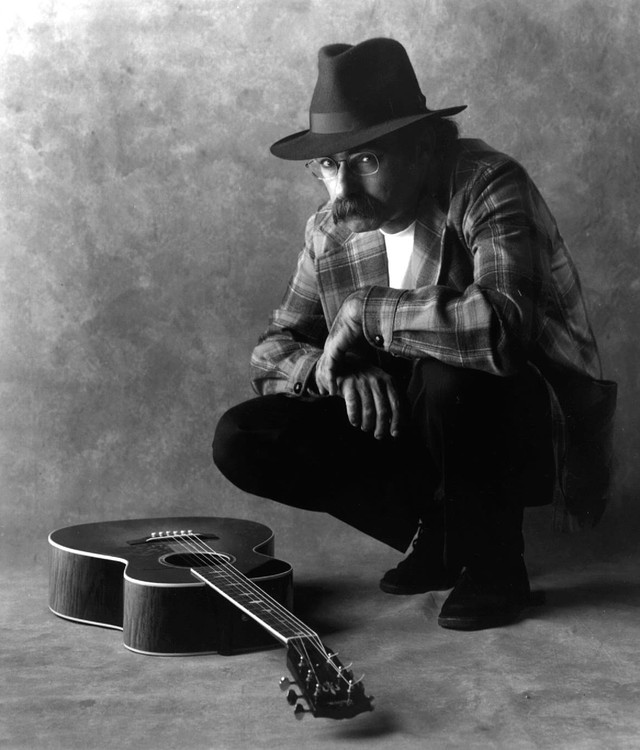
Spring Fed Records: Roy, thank you for bringing your two albums with Fats Kaplin to Spring Fed and MTSUs Center for Popular Music. It's great to have these back in print for the first time in nearly 50 years. Fats told me a great story of how you two met when he walked into a party and you saw his name on his fiddle case and asked him to jam. What was your life like before you met and started working together?
Roy Book Binder: I was rocking. I got out of the Navy in ‘65 and I was going to junior college on the GI Bill, but I was playing a lot of guitar. I was the old guy at the junior college. It was a $100 s a semester. I was pumping gas at a gas station and one of these hipster kids came in said: “I've seen you at the school there in the cafeteria. You sit with the veterans.” I said, yeah, well, I'm a veteran. He said, "We're having a soiree at my dad's in East Providence on Saturday. I think you'd have a good time.”
So, I said, okay, I'll go. I went over there and I walked in. And like he said, there's a lot of, you know, pot smoke and all that going on. And there was a record on a little record player on the floor. It was Dave Van Ronk, doing the old “Baby Let Me Lay It On You" thing. It was a Gary Davis thing that he took from Blind Boy Fuller-- long story. But, I just looked around and I said, this guy is just something else. I'm going to do that someday. And I started it over three times, trying to slow the party down. Everybody said: What's with this guy?
Then Dave Van Ronk did a concert at Pembroke College. This was the girl’s version of Brown before they combined the situation. And I went backstage, and I introduced myself to him. I said, I got two of your albums now and it's blowing my mind. He said, “What do you do?” I said, well, I'm going to junior college with the GI Bill, but I'm going to be a blues guy. He said, “Well, best of luck to you.” He had about four albums out at the time. I went to junior college for a couple of years and some guy taught me how to finger pick a little bit. I got out after about six months. I started going to the open mics. The first open mic I played in Providence, a coffee house, me and my buddy played the same guitar part. And I sang. We would basically do Dave Van Ronk songs. We were nervous, right? 'Cause we're going to go up in front of people. My God! We finished it, we went out back and smoked a cigarette, you know. He said, “What do you think?” I said, I don't know about you, but I’m gonna do it for the rest of my life. And here I am.
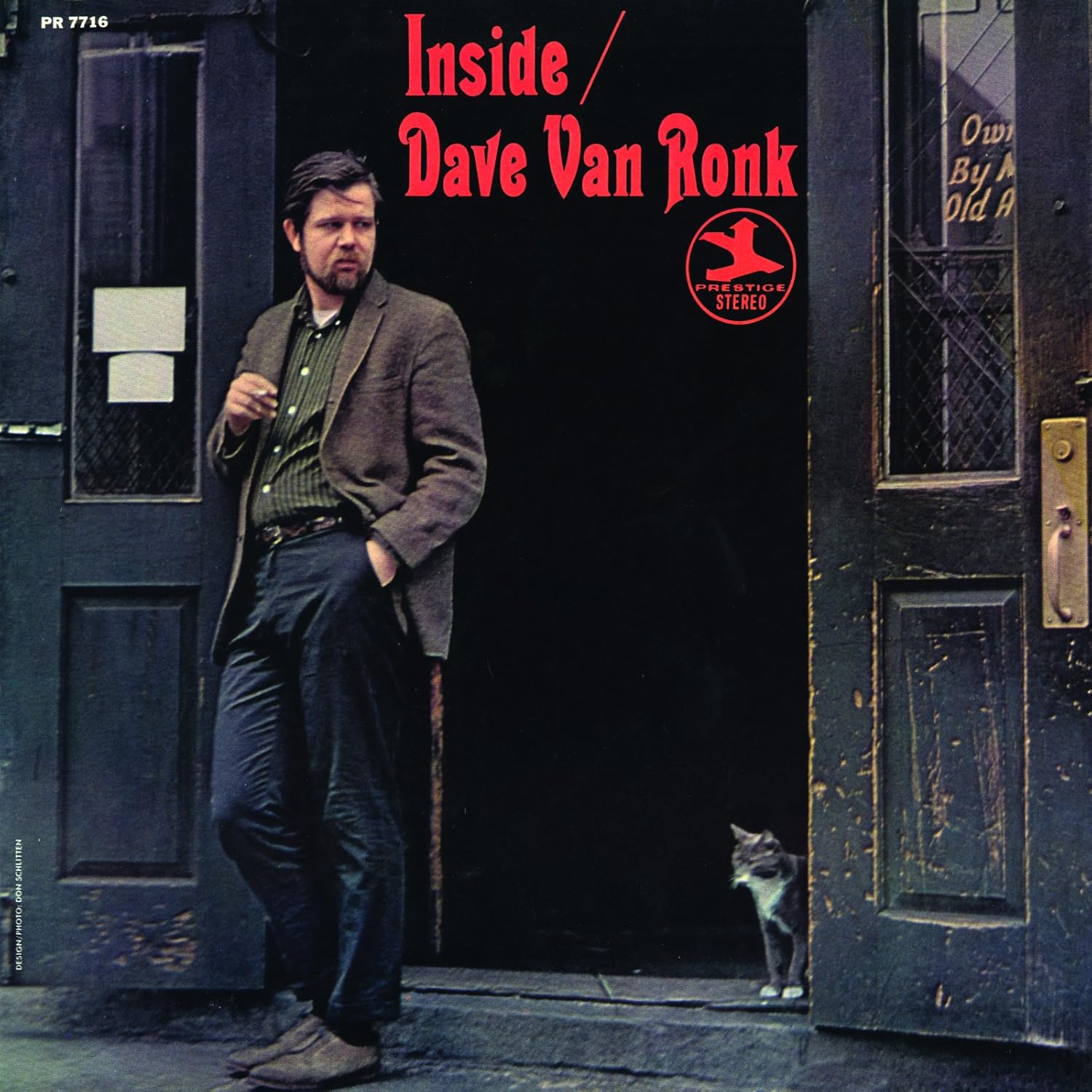
Then I got to New York and I was playing the open mics at the Gaslight Cafe on McDougal street. And the other open mics were people like Ritchie Havens and Phoebe Snow, Janis Ian--a lot of them did pretty good, you know? A hootenanny, they called it. Dave Van Ronk, his name would go on the marquee. After all the amateurs did their thing, he would go do his bit. He stayed upstairs most of the time. He didn't listen to us. He was at the Kettle of Fish bar, a world famous place up there, drinking Irish whiskey and holding court, which he was very good at. And he came down, I was the last one on one particular Tuesday night. He heard me do two songs and he walked into the dressing room to get ready to go up on the stage. And I looked at him and I said, do you remember me? He looked at me for a few minutes and said, “Yes, I do. And yes, you did.” I'm a blues guy.
He didn't say that, but that's what he meant. After his set, he took me home to his place on Waverly Square and we sat up and drank Irish whiskey and listened to records. He became a very important pal in my life.
SFR: When you met Fats, you had mostly been working solo, right?
Yes I only worked solo. After we met at the after party of the Northern New Jersey Folk Festival. We exchanged phone numbers as we both lived in Manhattan. I had been listening a lot to the great records of Eddie Lang & Joe Venuti, and other fiddle players including Stuff Smith and Howard Armstrong. Also listening to prewar, hillbilly string bands from the south. Fats took the subway down to my place and I played him some of that music and we worked out some tunes. He was so enthusiastic about the music and our sessions. The talented kid was like a sponge. I was delighted to see how quickly he took to the music I was playing. I had a big show coming up, opening for my old friends Sonny Terry & Brownie McGhee. And I hesitantly thought of asking him to partake.
Before that show, Bob Fass a DJ at WBAI public radio had a late night show and asked if I wanted to come down to the studio to promote the upcoming show. I asked Fats, who lived near the station, if he wanted to join me there. It was a late night show and Bob said he needed a nap, turning the mic over to me! Well, we played tunes and answered the phone, folks were digging us. It was quite time. I decided then to ask Fats to do the upcoming show with me at Max’s Kansas City on Park Avenue. Sam Hood. of the Gaslight Cafe fame, was managing Max’s at that time. He came up to the green room and asked if I had a “press kit,” as John Rockwell of the New York Times, wanted to know something about the opening act! Fortunately, I did as it was full of reviews for my Adelphi Record, Travelin’ Man, and my recent tour of the UK. The show went well, we had a great time, and it was very exciting! I paid Fats, I believe his first hundred dollar bill. For the next few days he called me to say there was no review in the Times. Sunday morning, he called again and said it’s in the paper and he’s coming down in the subway to show me. He didn’t tell me what it said, he was “freaking out.”. He arrived minutes later and in disbelief, the headline said “Sonny Terry & Brownie McGhee compliment, Roy Bookbinder & Kaplin, at Max’s”. The duo was born.
Roy Book Binder: Before that I ended up going to London winter of ‘69. Nick Perls had been reissuing 78s on his label Yazoo. He had a huge collection and he was interested in new people playing the old-time music like Larry Johnson. That's when he started a little side record company called Blue Goose. And he started that company because Larry Johnson was one of the only African-Americans that studied with Reverend Davis and really took off and created a new style of music. Nick fed him 78s to listen to, you know? He made cassettes for him.
Larry disappeared for about a year. Then he came back playing this fast and funky style, And then Nick invited me to some of his little record parties there. And I got to meet a lot of people that were into the old music. At one point he brought over this English gal, Jo Ann Kelly from England, and she was an incredible acoustic blues player. She played that Delta style and, I mean, she had a voice. She was a little white lady, big 12-string guitar and 6-string guitar, bottlenecks. She'd come on the stage, drag all this stuff out of a big purse. But she was a phenom in England. And Nick recorded her doing a couple of songs for Blue Goose Records. And he had a deal with CBS records that came out on some label doing old Robert Johnson songs before the Robert Johnson records were reissued, I believe. And it made a pretty big splash in the small little blues world.
She was light skinned with blonde hair. The record company wanted her to dye her hair white and go on tour with Johnny Winter, who was just starting to go out, you know, but she turned that down. She was a purist. She regretted it when she got older. But it made a lot of money. Anyway, I met Jo Ann Kelly there. And I recorded one song for an anthology, the first anthology for Blue Goose. I recorded three, but only one got on the album. And the other people on the album were local pickers, Woody Mann, Larry Johnson, and one song by Gary Davis. That was a big deal. I had a song recorded.
Dave Van Ronk and Ramblin' Jack Elliot were my two biggest heroes, really, because they weren't just duplicators. They did traditional music, but they had their own thing. And they were always themselves. There's a lot of great pickers that can play everything Blind Lover Jefferson did. But they're just like tape recorders. Dave Van Ronk & Ramblin’ Jack Elliott became important personalities in the game. And I admired that. They did it their way, not necessarily the best versions of the songs, but they were great because it was them. And that's why I think I have a career. And I often joke about it. You know, I try to sound like my heroes. I tried to. I mean, I had like one or two lessons from Gary Davis. They all encouraged me to go see him because he was giving $5 guitar lessons. And he was touring the world by then. His story is an incredible story. I had a job in an orphanage in the Bronx after I met Gary. I went to Gary's house and had a $5 guitar lesson. And he kind of didn't like the way I played “Candy Man.” He said, “You sound like Dave Van Ronk.” When your heroes become your pals, that’s a big win in the game of life.
SFR: What was the first thing that he showed you?
Roy Book Binder: Well, he was trying to change my “Candy Man” for three hours. He screwed me up so bad. I went for a second time. I didn't really take lessons. They all say I took lessons, you know? But he told me not to come by for a run of three or four weeks because he was going on tour. I told him I had $50 saved up and I'm going on tour with him. He laughed at me. But then the deal went down and I went on tour with him.
SFR: How would you describe your first memories of hearing and playing with that?
Roy Book Binder: His wife asked me if I could write some letters. So, I answered the letters for her. And one was from an artist in New Jersey. He was very enthusiastic. And he taught art to his little kids. And he said he played Gary Davis's music. And Mrs. Davis said, “Oh, very nice. Very nice. Thank you.” And on the back of the letter, I wrote, P.S., my name is Roy Book Binder and I'm going on the road with Reverend Davis. What's it like on the English scene with people playing country blues? And we took up a correspondence. And at that point, I was sort of living at the orphanage in the Bronx. I worked there for about a year. They were pretty good to me. It was interesting. You know, in the 1960s, we were trying to save the world. So that was my good deed.
The English guy, Robert Tilling, sent me one of the A-side and B-side compilations with Blue Goose. And 40 seconds in the first song, I started dancing around my room at the orphanage, saying: “I'm going to be a star in England.”
And I met Jo Ann Kelly, who was the British lady. She said, “If you're ever in England, ring us up.” And then Robert, I was sending him records. He's looking for different records he couldn't find in England. And he started to write for me. He set up a deal with Dobell's Jazz Record Shop, which was the hippest record store. The beatniks used to go to listen to jazz and stuff. It became a bluesy place. And they had a label called 77 Records in Soho, London. And he talked to Mr. Dobell that I was coming over and I wanted to record. So that was exciting. I got over there. Jo Ann was on the way out of town on tour, her and her brother. And they gave me their flat. He said, “Here's the keys, here's the clubs, go see these people. And we'll see you in three weeks.”
So, I had a place to live in London, which was pretty cool. Dobell's was like being in an old-time movie. I walk in this shop, and it's dark. I said to the clerk, I have an appointment with Mr. Dobell, I’m Roy Book Binder. He rings a buzzer, and I see a Venetian blind down at the end of the store, flip open a little bit. And he gets a buzz back. He said, “Mr. Dobell will see you now.” I walk in there. I don't know how old I was, 23, 24, maybe. I walk in there, and it's like being in an old time British movie. It was like Robert Morley, you know, big belly movie actor from the 1940s. He's got on a vest with a watch. He says, “Roy Book Binder, how are you doing?” I said, I'm doing all right. “You enjoying yourself?” I said, well, I just got here. He says, “Where are you staying?” I said, oh, I'm staying at Jo Ann's flat. That was impressive, you know? And we're chit-chatting away, and
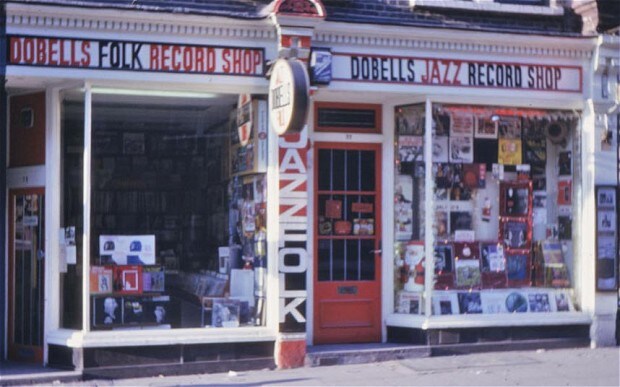
talking about recording for him. And he says, well, let's see how it develops. And all of a sudden, he gets another buzz. He looks through the Venetian blind. He says, “Oh, it's Ron Watts from the National Blues Federation.” So this other guy, also like an English actor, waddles in there with a vest and a sports jacket. “Ron, this is Roy Book Binder. He records for Nick Perls. He says, "What are you doing here?" We chit-chat, and he says, “What are you doing Wednesday?” I said, uh, oh, nothing. I just got here the day before yesterday. He says, “Do you want to do a show? We got Homestead Jameson and the Dusters are playing at the 100 Club on Oxford Street. They can pay 15 quid to open up." I said, what's a quid? “A pound.” Oh, yeah, I'll do it. So, I got me a gig and a flat, you know, for the second day.
I get on the bus to go back to my flat, and there's a big vertical sign, a picture of a bus driver. It says earn up to 15 pounds a week being a London City bus driver. I sat there feeling pretty good about myself. I've been here for 48 hours, and I'm making a bus driver's wage. You know, it's unbelievable. I opened up the show for Homestead Jameson who was terrible. I could go on for days about that, but I got reviews that changed my life. “Not Since Ramblin' Jack came over from New York with a cowboy hat have we’ve been so entertained by a New Yorker with a cowboy hat and a guitar. It kept us entertained for the entire evening.." or something.
And that was the beginning. I had reviews in Jazz Journal, Sounds Magazine. I was killing it. And the (National) Blues Society, they were booking me. And then I did shows with Larry Johnson, and Arthur “Big Boy Crudup and every old guy they brought over. I got back in ‘71, ‘72. Well, like Fats said, he walked by the room. And I said, you play any blues? He said, “Yeah!” I said, get in here, we're killing it. We both lived in Manhattan. I turned Fats on to Joe Venuti. I don't think you ever heard Joe Venuti and Eddie Lang. I don't think he'd ever heard Stuff Smith. I turned him on to the Mississippi Sheiks.
SFR: Can you recall any particular tune when you realized that this would be a good duo?
Roy Book Binder: I knew it would be. It was good, and it was an interesting setup. He was kind of quiet, and I was kind of loud.
SFR: How did your thinking changed when Fats joined, in terms of a duo?
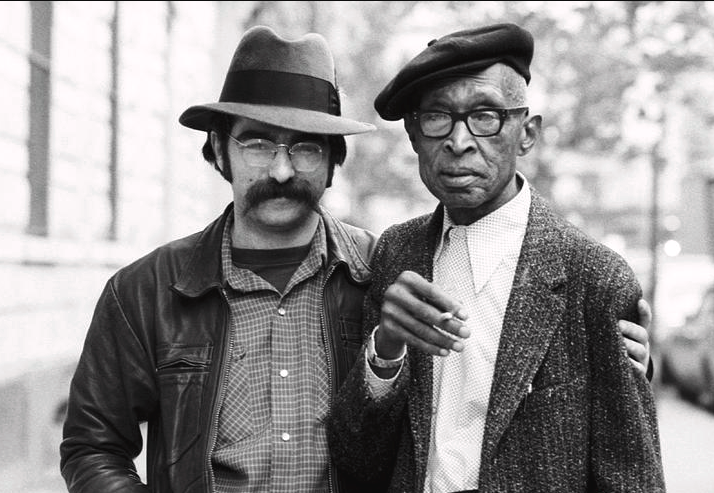
Roy Book Binder: Let me back the slide just a little bit. When I got back from England, I didn't want to record for Blue Goose again, but I recorded for Delphi. I recorded my first full-length album, Traveling Man. That's the one Larry Johnson was supposed to be on, and we had the rehearsal tape. He was bipolar, schizophrenic, and he would freak out on people and ruin every chance he had. I went to pick him up for the session in Maryland, and he refused to go. I thought, Maryland? What are you talking about? And I was very pissed off but I ended up glad he didn't go. It was my first record on Delphi. I got five stars in Downbeat, the first solo record to get a review in Downbeat. I think the writer got fired, but that's beside the point. Better to be lucky than smart, talented, or good-looking. That's my new mantra. (Photo Credit: Roy Book Binder and Pink Anderson by David Gahr)
So, I had this record, a five-star review. I was sort of happening, and that's when I played at the festival in Jersey and Fats showed up. I never changed my playing. He adapted to what I did. To be honest with you, I have very little musical knowledge or talent. I'm a one-trick pony. I can't jam with people. I don't know the basics of guitar. When I started to teach at Jorma Kaukonen’s guitar camp, I told them about Downbeat. I know eight chords and three ways to make them, but they all admired what I did. A little more than that now, but I never made any effort to learn any music. Fats was like a sponge, learning everything he could. He outgrew me pretty quick, but it was an interesting time. I had to teach him how to drive and all that. I had this big gig with Sonny Terry and Brownie McGee at Max's Kansas City on Park Avenue. I worked with Sonny and Brownie quite a few times over the years. And then Fats and I we were starting to goof around together playing music, and I gave it a serious thought if I wanted to invite him to this. This is his first gig, you know?
SFR: Do you have a favorite of the two records that the two of you made?
Roy Book Binder: I haven't really heard them in years. The second one it didn't say “Roy & Fats” anymore. He was going his way, which was a good thing.
SFR: It’s a special camaraderie that you two have.
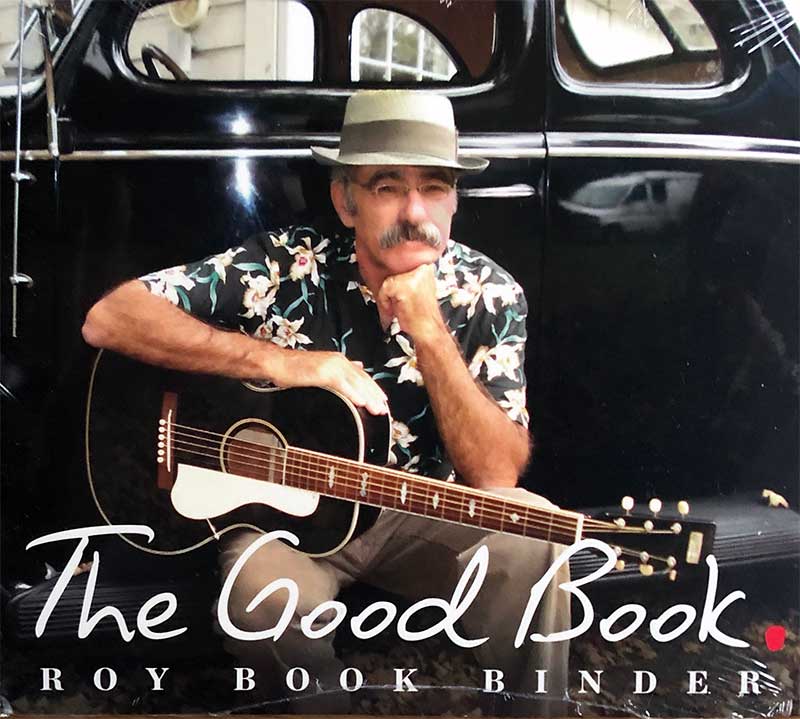
Roy Book Binder: Well, when you're in a studio, you start to screw it up. I hate to record. I mean, I tell my audience now: Oh, by the way, I'm having the pre-Christmas sale. I got some CDs over there and I got about five or seven copies of my new record. The new CD is 13 years old now. Everybody gets hysterical. I say, I liked it so much. I'm never going to beat that. And I'm never recording again. It was a record of my dreams. The Good Book, with a clarinet player. That was as good as I get. And now I'm in my 80s, so I don't plan to record again. There’s no need to do another record. I don't have a desire to produce another. It wouldn't change my life.
SFR: And did Nick Pearls produce both of those records?
Roy Book Binder: Actually, no. The first one, we got a record deal with Philo Records, which was a new folky thing. They were trying to be like a Folkways. They were in Vermont. So we went up there and the folks there, Utah Phillips, the Golden Voice of the Southwest, you remember him? He was friends with Rosalie Sorrells. They were all recording for Philo Records. It was going to be the people's record company. And we went up there and spent a week up there. And my sister made the cover, and I went up there with the cover. And it was tedious making the record. Fats you know, had to do a million takes. He was never satisfied. Just two kids, you know? My motto's always been, good enough for folk music, you know? But we were pretty pleased with what we did.
And then Philo Records called me up and said, there's a problem with your cover. And I said, what's the problem? He said, all our covers, you know, like Folkways kind of, has a style. I said, yeah. They said, “Well, we've never done color. And we have our logo—The artist is in full control of our album….This album is as conceived by the artist...etc. And that has to be on the front of the album.” I said, well, if I want it on the back of the album, I wasn't in charge, was I? And we were going at it about that. And they said, “Well, we're going to have a meeting with our partners and discuss it.” And then they called me up and said, “We've decided that we're sticking by our guns. And if you don't want to follow our album cover designs….”. And then I knew right away that Nick Pearls would put it out. So I called him up. I said, I got an album in the can. And that was a Git Fiddle Shuffle. Sometimes the folkies are so far left, they go right, you know? That was pretty exciting.
SFR: Tell me about that wonderful photo of you and Fats in front of the car.
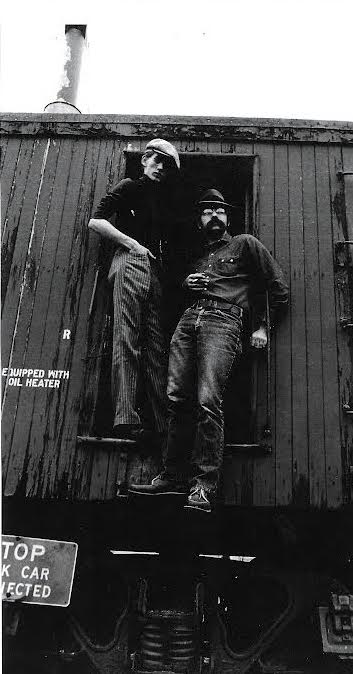
Roy Book Binder: My favorite photograph is where we're hanging out of a boxcar. Did you see that one? Back when I was still out in the freight scene, we were playing in Cape Cod somewhere. I'm near Cape Cod right now. And some guy said, I have these old cars. You want to do a photo shoot? We said, yeah, let's do it. We got a couple of shots like that. It should have been the album cover, but it never was.